 Skip to content
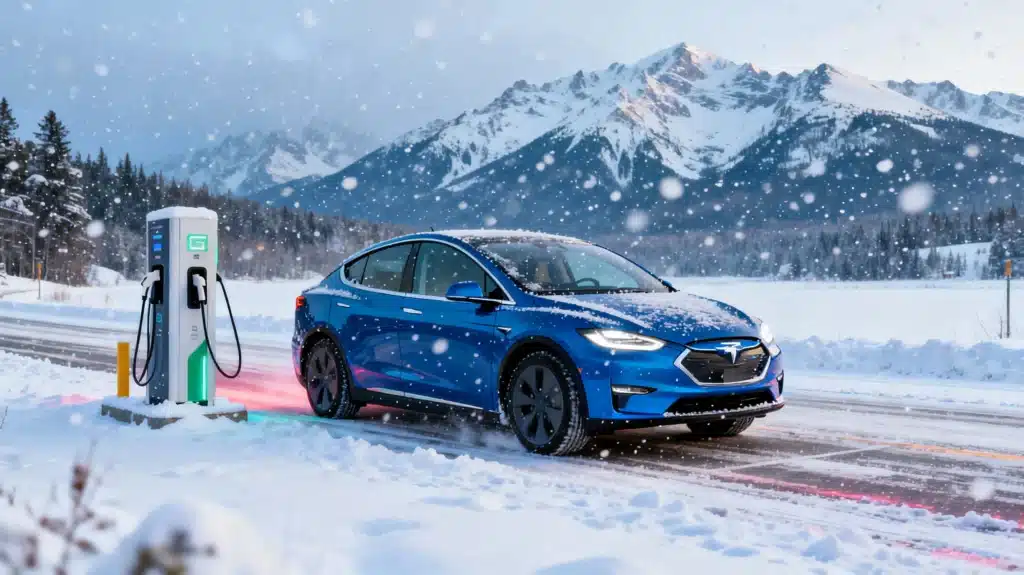
Driving an electric vehicle through a Canadian winter or harsh northern climate feels like a balancing act—you want the environmental benefits and low operating costs of an EV, but you’re legitimately concerned about battery range evaporating in freezing temperatures. The good news? Modern electric vehicles are engineered specifically for cold climates, and several affordable options deliver impressive winter performance without forcing you to choose between sustainability and practicality.
The reality is this: Cold weather reduces EV range by 20-40%, not because the technology fails, but because batteries need warmth and cabins require energy-intensive heating. However, the difference between a well-engineered cold-weather EV and a poorly-designed one can mean 40 extra miles or a completely compromised experience. Understanding which affordable models handle winter best—and why—transforms winter driving from anxiety-inducing to genuinely manageable.
Why Cold Weather Impacts EV Range
Before recommending specific vehicles, you need to understand the science. Unlike traditional gas engines that produce waste heat to warm cabins essentially for free, electric vehicles must draw directly from their battery pack to maintain cabin temperature. Research consistently shows that cabin heating contributes 30-50% of the winter range loss problem.
Battery electrochemistry compounds this issue. Lithium-ion batteries slow down at lower temperatures. The chemical reactions inside happen more slowly, reducing both available power and charging speed. When temperatures drop to freezing (0°C/32°F), your battery has less usable energy and charges more slowly. Test results from the Canadian Automobile Association reveal that EVs experienced range reductions between 14-39% compared to official ratings, with some models retaining only 65% of their rated range in extreme cold.
However, this is temporary and not permanent. Once temperatures rise, your range returns to normal. The degradation is thermal, not chemical—your battery recovers completely as conditions improve.
The magic solution comes in two forms: heat pumps and battery preconditioning. Heat pumps are 300% more efficient than traditional electric resistance heaters because they transfer existing heat rather than generating it from scratch. A vehicle equipped with a heat pump can lose only 8-10% of range due to heating, compared to 25-30% for vehicles with resistive heating alone.
What Makes a Cold-Weather EV “Affordable”?
For this guide, “affordable” means electric vehicles priced under CAD $55,000 (approximately USD $40,000-$42,000), positioning them competitively against used gas vehicles and accessible to average households, especially with provincial and federal rebates.
The cold-weather hierarchy looks like this:
Premium Features (but affordable pricing): Vehicles with standard heat pumps, all-wheel drive, battery preconditioning, and heated seats/steering wheels
Mid-Range Value: Models with most cold-weather features but possibly without top-tier cabin insulation
Budget Options: Vehicles that work in winter but require more driver awareness and planning
Top Affordable EVs for Cold Weather (Canada & Northern USA)
1. Hyundai IONIQ 5: The Cold-Weather Champion
Starting Price: CAD $52,999 | USD Base price equivalent
Range: 488 km (303 miles) with Long Range AWD
Winter Performance: Retains 97% of EPA range at freezing temperatures
The IONIQ 5 emerges as the standout choice for cold climates in this price range. Why? Battery preconditioning built into the navigation system, dual-motor AWD delivering exceptional traction on ice, and a sophisticated heat pump system that actually works efficiently in the exact temperature range Canadian winters favor (-5°C to +15°C).
Most critically, independent testing reveals the IONIQ 5 loses only 20% of its rated range in winter conditions—far better than average. Real-world owners report that with proper preconditioning while plugged in before trips, they experience minimal range anxiety even in extreme cold.
The IONIQ 5 also charges rapidly in cold weather. Unlike some competitors that see charging speeds plummet below freezing, this vehicle’s thermal management system keeps the battery receptive to charging current. You can add 100+ km of range in a 15-minute DC fast-charging session even in winter, making long-distance winter travel genuinely feasible.
Cold-weather specific features:
- Standard AWD with advanced traction control optimized for snow
- Dual 12.3-inch screens with navigation that integrates charging optimization
- Heated seats, steering wheel, and windshield (energy-efficient heating)
- Pre-cooling/heating schedules remotely via smartphone
- 77.4 kWh battery providing substantial range buffer
Practical consideration: The IONIQ 5 qualifies for federal rebates up to CAD $5,000, plus provincial incentives. In Quebec, buyers can access combined rebates exceeding CAD $13,000. In British Columbia, an additional CAD $3,000 provincial incentive applies.
2. Subaru Solterra: Purpose-Built for Snow
Starting Price: CAD $38,495 (2026 model, marked down CAD $6,500 from 2025)
Range: 288 km (179 miles) with standard AWD
Winter Performance: Designed specifically for harsh climates with X-Mode driving assistance
The Subaru Solterra is the only EV specifically engineered with Subaru’s legendary all-weather driving DNA. Every Solterra comes standard with dual-motor AWD—not optional, not a premium trim feature. This matters profoundly in winter driving.
Subaru engineered X-Mode with Snow, Deep Snow/Mud, and Grip Control settings that independently control each wheel for maximum traction on slippery surfaces. The system reduces throttle response sensitivity to prevent wheel spin while accelerating in snow—a feature that makes genuine difference on black ice.
2024 Solterra owners report approximately 100 miles of range below 0°F (-18°C), which sounds minimal until you understand the driving pattern. Most northern drivers use their Solterras for local commuting and weekend trips, not cross-country highway driving. For these use cases, the Solterra excels.
The 2026 model year brought crucial improvements: enhanced battery conditioning systems that enable significantly faster charging in cold weather (up to 80 minutes quicker than the 2023 model under specific conditions). Charging from 10% to 80% now requires approximately 28 minutes even in winter temperatures.
Subaru also includes practical winter features:
- Heated steering wheel (more efficient than full cabin heating)
- Battery heating system maintaining optimal temperature
- Higher ground clearance (170 mm) for snow navigation
- Heated side mirrors and heated wiper fluid nozzles
- Regenerative braking optimized for snowy surfaces
Important caveat: The Solterra’s 288 km range is modest compared to competitors. This vehicle succeeds for owners whose daily driving stays within 100 km round-trip and who have access to home charging. Long-distance winter highway travel requires planning.
Real-world feedback from northern owners: Owners in Vermont with two winters of experience confirm the Solterra handles winter excellently for local driving. One owner reported comfortable operation even during 2025’s extreme cold, noting that garage parking overnight and strategic charging easily compensated for seasonal range reduction.
3. Toyota bZ4X AWD: The Quiet Performer
Starting Price: CAD $48,995
Range: 355 km (220 miles) with AWD
Winter Performance: X-MODE system with Snow Mode, superior snow handling stability
The Toyota bZ4X represents Toyota’s commitment to north-American winter drivers. Every AWD model includes X-MODE with Snow and Dirt selections plus Grip Control, providing traction management similar to the Solterra (understandable since both use Toyota Group platforms).
What distinguishes the bZ4X in winter: Independent testing from YouTube automotive reviewers and user forums consistently praise the bZ4X’s predictable winter handling. Unlike some EVs that feel twitchy in snow, the bZ4X delivers planted stability on winter roads. This reflects Toyota’s engineering philosophy prioritizing reliability over performance theater.
The bZ4X includes a heat pump system designed specifically for cold climates. Combined with the included battery preconditioning, this translates to approximately 80% range retention in winter conditions—meaningfully better than vehicles lacking these systems.
Critical winter features:
- Standard AWD with X-MODE (Snow and Dirt modes)
- Heated seats and steering wheel with efficiency controls
- Battery heating system maintaining optimal operating temperature
- Regenerative braking adjustable through drive modes
- All-wheel-drive traction control system specifically calibrated for ice
Practical consideration: The bZ4X qualifies for federal rebates and provincial incentives across North America. Canadian buyers should note that 2026 models receive significant power upgrades (214 hp for current AWD, increasing to 338 hp for 2026 AWD), though the 2025 models remain competitively priced.
User feedback emphasizes reliability and understated competence rather than wow-factor features. This matches Toyota’s historical positioning and appeals to buyers prioritizing dependability over technology flash.
4. Ford Mustang Mach-E
Starting Price: USD $37,999 (CAD $55,690) | Canadian starting CAD $52,995 (select trims)
Range: 380-515 km (240-320 miles) depending on configuration
Winter Performance: NEW for 2025: Heat pump system adding ~32 km (20 miles) of winter range
The 2025 Ford Mustang Mach-E represents a watershed moment. After three model years of frustration from Canadian owners struggling with resistive heating in winter, Ford finally integrated a heat pump across all 2025 trim levels. This single change transforms the Mach-E from “tolerable in winter” to “genuinely competitive” in cold climates.
Why the 2025 improvement matters: Mach-E owners running the numbers reveal that the heat pump addition preserves approximately 20 extra miles of range—meaningful when winter range loss typically reaches 30-40%. The long-range battery gets new internal architecture with fewer cells while maintaining identical rated range, improving efficiency across all temperatures.
The Mach-E’s AWD system uses separate motors for front and rear wheels, enabling independent traction control that handles winter surfaces with confidence. Real-world testing shows the Mach-E maintaining 70% of EPA-rated range in winter conditions when equipped with the heat pump.
2025 Mach-E winter enhancements:
- Standard heat pump on all trims (9 kW vs. 5.5 kW resistive heating)
- New underbody aero shields improving efficiency
- Heated seats and steering wheel with independent controls
- Remote climate preconditioning via Ford app
- Blue Cruise hands-free driving on compatible roads
- Advanced thermal management system
Important consideration: The heat pump reduces frunk storage space noticeably—a real trade-off for Canadian winter drivers who value cargo flexibility. However, the significantly improved winter performance justifies this sacrifice for most users.
Canadian pricing becomes compelling when factoring in provincial rebates. Quebec residents can access combined federal and provincial incentives exceeding CAD $10,000. British Columbia and other provinces similarly offer substantial support.
5. Chevrolet Equinox EV: The Value Proposition
Starting Price: USD $34,995 (CAD $44,999 estimated) with some regional variation
Range: 513 km (319 miles) with FWD; slightly less with AWD
Winter Performance: Competent handling with available heat pump on higher trims
The Chevrolet Equinox EV arrived recently but already captures attention for its remarkable value proposition. Starting under USD $35,000 with over 300 miles of range—and qualifying for federal tax credits—the Equinox EV positions itself as seriously affordable.
The winter story: The Equinox EV includes a thermal management system designed to balance cold-weather performance with costs. Higher trim levels include heat pumps (which become standard on 2025 models). Winter testing shows the Equinox EV retaining approximately 68% of EPA-rated range in freezing conditions—respectable for a budget-oriented vehicle.
Available all-wheel drive provides winter traction, though FWD remains the base configuration. For northern buyers planning primarily local driving, the FWD Equinox EV represents exceptional value. For those requiring more winter confidence, stepping to AWD remains affordable even at higher trims.
Equinox EV winter capability:
- Available AWD for snow/ice confidence
- Heat pump standard on higher trims, optional on base (2025+)
- Heated seats and steering wheel on most trims
- Regenerative braking with adjustable intensity
- Over 300 miles of range providing buffer for winter range loss
Important reality check: The Equinox EV is relatively new to market. Long-term winter reliability data remains limited compared to established models. However, Chevrolet’s engineering team clearly prioritized winter performance in the design phase.
For budget-conscious buyers in northern climates, the Equinox EV represents perhaps the best current value. Federal tax credits (USD $7,500 for qualifying buyers) reduce the effective starting price to around USD $27,500—genuinely affordable EV ownership.
Honorable Mention: Kia Niro EV
Starting Price: CAD $45,595
Range: 407 km (253 miles)
Winter Performance: Solid mid-range option with heat pump and available AWD
The Kia Niro EV deserves mention as a practical winter choice offering excellent space, reasonable pricing, and capable cold-weather technology. With a heat pump standard and available AWD, it positions itself as a family-friendly option that neither compromises on winter capability nor breaks budgets.
The Niro EV retains approximately 70% of rated range in winter conditions and includes battery preconditioning accessible through the navigation system. For buyers prioritizing interior space and practicality over extreme range, the Niro EV delivers genuine value.
The Heat Pump: Why It Matters More Than You Think
You need to understand the practical impact of heat pump technology because it’s the single most important winter performance differentiator among affordable EVs.
Testing by Recurrent (an EV analytics platform tracking thousands of vehicles) compared Tesla Model 3 vehicles with and without heat pumps during winter driving:
- Model 3 with heat pump: Only 8% increased energy consumption for heating
- Model 3 with resistive heating: 26% increased energy consumption for heating
That 18-percentage-point difference translates directly to meaningful range preservation. A 300-mile-range vehicle with a resistive heater might achieve 180-195 miles in winter. The identical vehicle with a heat pump would achieve 220-240 miles.
The heat pump works by transferring existing heat from the battery pack and drivetrain to the cabin, rather than generating heat electrically. In moderately cold temperatures (the range -5°C to +15°C where Canadian and northern US winters spend most of their time), heat pumps operate at efficiency levels approaching 300% compared to resistive heating.
Critical limitation: Heat pump efficiency drops dramatically below -15°C (-5°F). In extreme Arctic conditions, vehicles supplement heat pumps with resistive heating elements. However, this rarely impacts most North American drivers except those in extreme northern regions.
Battery Preconditioning: Your Secret Winter Weapon
Most owners don’t realize that preconditioning—warming your EV’s battery and cabin while still plugged in—is the single most effective winter range preservation strategy available.
Here’s why: When you leave home with a cold battery pack, the vehicle must expend energy warming it before extracting full power. Your battery also charges more slowly and accepts less current when cold. Combined, these factors create substantial inefficiencies.
The solution: Schedule preconditioning to complete before you unplug. The vehicle draws energy from the grid (not your battery) to warm both the cabin and battery pack. When you’re ready to leave, your battery is pre-warmed and your cabin is comfortable—and you haven’t lost a single mile of driving range to heating.
Most newer EVs support this through either:
- Navigation-based preconditioning: Set a destination with a fast-charger planned en route; the vehicle automatically preconditions the battery before that charge session
- Scheduled preconditioning: Set a departure time; the vehicle warms up automatically beforehand
- Remote app preconditioning: Use the manufacturer’s smartphone app to start heating remotely
Real-world impact: Owners in cold climates report 15-20% range improvement simply by preconditioning while plugged in. This single behavior change often eliminates range anxiety entirely.
All-Wheel Drive vs. Front-Wheel Drive in Winter
This generates heated debate, but here’s the engineering reality: All-wheel drive provides superior traction on ice and in heavy snow. Period.
However, traction isn’t the only winter consideration. FWD vehicles are simpler, lighter, and less expensive—meaningful factors when budgets are constrained.
For northern driving patterns:
AWD makes sense if:
- You navigate mountain passes or steep hills regularly
- You encounter frequent icy conditions
- Your commute involves unmanaged winter roads
- You require absolute confidence in all conditions
FWD remains sufficient if:
- Your daily driving stays under 100 km
- You park in a garage (avoiding ice buildup overnight)
- You have home charging access (enabling charge-before-commute strategy)
- Your region receives regular road maintenance
The practical truth: Modern FWD electric vehicles with good winter tires handle winter competently for urban and suburban driving. The instant torque control of electric motors actually provides advantages over traditional gas FWD cars. However, rural or mountainous driving benefits meaningfully from AWD.
Winter Range: Practical Strategies
Understanding the science is one thing; applying practical strategies is another. Here’s what research and user experience confirm actually works:
Tire Selection
Invest in winter tires specifically. Winter tires reduce rolling resistance compared to all-season tires and dramatically improve traction. EV-specific winter tires (like Michelin X-Ice SNOW or Continental VikingContact 8) further optimize efficiency and range.
Real-world data: Proper winter tires preserve 5-10% more winter range compared to all-season alternatives.
Heated Seats and Steering Wheel Strategy
Use heated seats and steering wheel instead of full-cabin heating whenever possible. This delivers personalized warmth while drawing significantly less battery power.
Practical application: Keep cabin temperature 3-5°C cooler while using heated seats set to medium. You remain comfortable while preserving 10-15% additional range.
Gentle Acceleration
Electric motors deliver full torque instantly. While tempting, aggressive acceleration drains range faster in cold weather when battery efficiency is already compromised. Progressive, smooth acceleration maximizes efficiency.
Garage Parking
This single factor impacts winter range meaningfully. A vehicle that stays warm overnight (0°C in a garage vs. -15°C outside) requires less preconditioning energy and begins driving with a warmer battery.
Owners with garage access report 10-15% better winter range than identical vehicle owners without garaging.
Route Planning and Speed Management
Highway driving above 110 km/h significantly reduces EV efficiency year-round, and the effect amplifies in winter. Reducing highway speed by just 10 km/h can extend range by 5-10%.
Plan winter road trips using ABRP (A Better Route Planner) or manufacturer-specific navigation. These tools account for temperature, elevation, and charging speed to provide realistic range projections.
FAQ
Q: Will my EV battery permanently degrade in cold weather?
A: No. Cold weather reduces temporary range loss, not permanent battery capacity. Once temperatures normalize, your range returns to baseline. Modern battery management systems protect battery chemistry in extreme cold.
Q: What’s the realistic range loss percentage?
A: Expect 20-40% range reduction depending on temperature and heating usage. Well-engineered EVs with heat pumps experience 20-30%. Models with resistive heating face 30-40% losses.
Q: Can I charge my EV in sub-zero temperatures?
A: Yes, with caveats. Charging becomes slower below 0°C, and charging from high state-of-charge takes considerably longer. However, charging at 10-20% state-of-charge charges more quickly even in cold. Modern thermal management systems warm batteries for charging automatically.
Q: Do I need to drive differently in winter?
A: Slightly. Smooth, progressive acceleration maximizes efficiency. Aggressive acceleration drains range faster. Otherwise, EVs actually handle winter better than gas cars—instant torque control provides superior traction.
Q: How cold is too cold for my EV?
A: Modern EVs operate effectively down to approximately -30°C (-22°F). Below that, thermal management systems work harder but function acceptably. Only in extreme Arctic conditions does cold create genuine operational concerns.
Q: What happens if I run out of charge in winter?
A: Modern EVs alert you well before this occurs. Range estimates adapt to real-time driving conditions and temperature. Additionally, regenerative braking recovers energy from braking and descending, extending range dynamically.
Q: Will winter reduce my EV battery warranty?
A: No. Manufacturer warranties cover cold-weather use. Most cover 8 years/160,000 km minimum. Cold weather doesn’t accelerate degradation beyond normal aging.
Related Resources
For comprehensive guidance on choosing affordable electric vehicles suited to your specific situation, explore our pillar page on affordable electric vehicles in the USA, which addresses budget considerations, incentive programs, and long-term ownership costs across diverse driving patterns.
Additionally, our detailed analysis of the five best electric vehicles for cold weather provides deeper technical specifications and real-world owner experiences for models excelling in harsh climates.
The Bottom Line: Winter EV Ownership Is Viable and Affordable
The technology is mature. The vehicles are reliable. The infrastructure exists. Modern affordable electric vehicles with heat pumps, battery preconditioning, and available all-wheel drive genuinely work in Canadian winters and northern US climates—and they do so without compromising ownership costs or practicality.
The IONIQ 5 emerges as the current cold-climate champion among affordable options, offering heat pump efficiency, sophisticated preconditioning, and impressive winter range retention at approximately CAD $52,999. The Subaru Solterra appeals to buyers prioritizing all-weather capability and AWD standard across all trims. The Ford Mustang Mach-E finally addresses Canadian winter needs with its 2025 heat pump integration. The Chevrolet Equinox EV delivers remarkable value for budget-conscious northern drivers.
Stop viewing winter as a barrier to EV ownership. Start viewing it as solved problem with mature solutions. With proper vehicle selection and basic cold-weather strategies, driving electric through Canadian winters is not merely possible—it’s increasingly practical and economically sensible.