 Skip to content
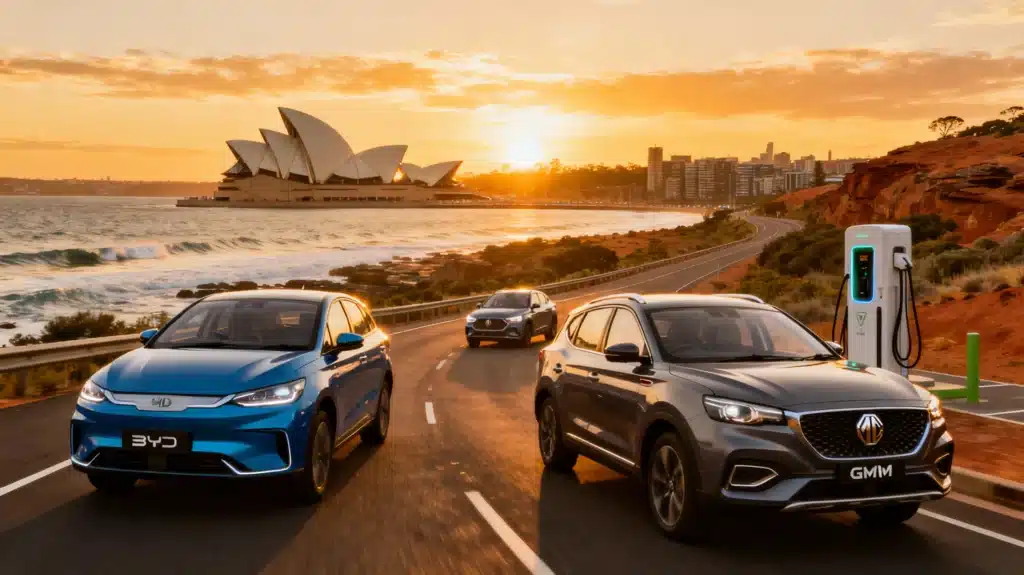
If you’re searching for affordable electric vehicles in Australia, you’ve landed at a pivotal moment in the market. The affordable EV landscape in Australia has transformed dramatically over the past two years, driven by aggressive pricing from Chinese manufacturers like BYD, MG, and GWM who have fundamentally disrupted expectations about what electric vehicles should cost. For Australian buyers from Melbourne to Brisbane, Perth to Hobart, choosing an affordable EV has never offered more genuine options. Today’s cheapest electric vehicles start from approximately AUD $23,990 before on-road costs, positioning genuine electric mobility within reach of mainstream households for the first time.
The Australian electric vehicle market operates under vastly different dynamics compared to North America. Chinese brands dominate the affordable segment with price leadership that North American manufacturers haven’t matched, federal incentives focus on fringe benefits tax exemptions rather than purchase rebates, and the charging infrastructure challenge differs dramatically given Australia’s vast geography and lower population density outside major cities. Understanding these unique factors is essential for making informed decisions about affordable EV ownership in the Australian context.
Australia’s Affordable EV Market
Three years ago, affordable electric vehicles barely existed in Australia. The market remained dominated by Tesla’s premium-priced offerings and European manufacturers targeting affluent early adopters. The average EV price hovered around AUD $65,000, effectively pricing out millions of ordinary Australian families. This supply gap created opportunity, and Chinese automotive manufacturers seized it aggressively.
The entry of BYD, MG, and GWM into the Australian market with sub-AUD $40,000 offerings triggered a cascade of price reductions and competitive responses that continues reshaping the entire segment. By 2024, Chinese brands captured approximately 60% of all affordable EV sales in Australia, with MG and BYD alone accounting for nearly 40% of the country’s total EV market share. This transformation demonstrates that globally, the most affordable electric vehicles come from manufacturers unburdened by legacy cost structures and premium brand positioning.
Government policy reinforced this shift through the Federal Government’s 2022 Electric Vehicle Discount Bill, which eliminated the 5% import tariff on electric vehicles and established a fringe benefits tax exemption for eligible EVs leased through novated lease arrangements. Combined, these measures reduced the effective cost of transitioning to electric by thousands of dollars annually for salary-sacrificing employees, dramatically accelerating adoption among employed Australians.
Australia’s Cheapest Electric Vehicles: Priced from $23,990
The most affordable electric vehicles available in Australia today represent genuine capability rather than compromised placeholder products. Each delivers practical range, functional technology, and legitimate quality rather than serving as loss-leader vehicles designed solely to establish market presence.
BYD Atto 1: The Affordability Breakthrough at $23,990
The BYD Atto 1 holds the distinction of being Australia’s most affordable electric vehicle ever, launching in late 2024 with a base price of AUD $23,990 before on-road costs. This represents a genuinely revolutionary price point, undercutting not just competing electric vehicles but also similarly-sized traditional petrol-powered hatchbacks like the Mazda 2 which starts at AUD $26,990. For urban dwellers and first-time EV buyers, the Atto 1 redefines what affordable electric mobility means in practical terms.
The Atto 1 comes in two configurations. The Essential trim combines a 30 kWh battery with urban-focused capabilities including approximately 290 kilometres of WLTP range, sufficient for most daily commuting and weekend urban driving. The Premium variant scales up to 43.2 kWh capacity, extending range to approximately 430 kilometres for buyers requiring greater flexibility. Both support rapid DC charging from 10% to 80% in approximately 30 minutes, enabling practical mid-journey charging during longer road trips.
Inside, the Atto 1 delivers surprising functionality. A 10.25-inch digital display dominates the dashboard, providing intuitive infotainment integration without the premium technology frills found in higher-priced competitors. Climate control maintains cabin comfort, while parking sensors and a reversing camera handle practical convenience. Safety equipment includes seven airbags, automatic emergency braking, lane keep assist, and blind spot monitoring, matching or exceeding competitors priced thousands of dollars higher.
The Atto 1’s chassis prioritizes stability and practicality over sportiness, with double-wishbone front suspension and multi-link rear arrangement tuned for comfort and body control on Australian roads. Ground clearance of 180 millimetres clears typical driveways and minor obstacles, though ground-hugging approach angles remind you this isn’t a genuine off-road vehicle.
For employed Australians structuring purchases through novated leases, the Atto 1’s sub-AUD $25,000 pricing places it well below the Luxury Car Tax threshold of AUD $91,387, ensuring full eligibility for the fringe benefits tax exemption. This transforms the effective cost, with some models becoming cheaper than comparable petrol vehicles after accounting for the FBT exemption through salary sacrifice arrangements.
BYD Dolphin: Refined Affordable Practicality from $29,990
The BYD Dolphin Essential model sits slightly higher in the affordable EV hierarchy at AUD $29,990 before on-road costs, yet delivers noticeably enhanced refinement compared to the Atto 1. BYD’s second-generation small hatchback targets buyers seeking a balance between affordability and quality, prioritizing material and assembly quality over cutting-edge technology or performance.
Available in Essential and Premium configurations, the Dolphin Essential combines a 44.9 kWh Blade battery with 340 kilometres of claimed WLTP range. The Premium model scales to 54.4 kWh capacity, extending range to 430 kilometres. Both deliver measured acceleration and efficient highway cruising rather than performance thrills, perfectly aligned with mainstream buyer expectations for cost-conscious transportation.
The Dolphin’s cabin demonstrates BYD’s focus on quality materials and thoughtful design. A 12.8-inch rotating touchscreen display commands the dashboard, capable of portrait and landscape orientation to optimize interface usability. Panoramic sunroof on Premium models creates perceived spaciousness in the compact interior. Climate zones maintain temperature preferences for driver and passenger independently, while smartphone integration provides connectivity without requiring premium infotainment systems.
The Dolphin’s packaging proves remarkably efficient, delivering five comfortable seats and 440 litres of boot space despite compact exterior dimensions measuring just 4.07 metres in length. Fold the rear seats and available cargo volume exceeds 1,200 litres, accommodating weekend luggage or modest deliveries. This practicality resonates with Australian families who need genuine transportation flexibility without premium vehicle pricing.
Safety appointments match Korean competitors in most aspects. Six airbags, automatic emergency braking, adaptive cruise control, lane keep assist, and blind spot detection provide comprehensive protection. The Dolphin received a five-star crash test rating from Global NCAP when independently tested, demonstrating BYD’s manufacturing standards meet international benchmarks rather than regional shortcuts.
BYD Atto 2: Compact SUV Affordability from $31,990
For buyers preferring SUV proportions but unwilling to abandon affordable pricing, the BYD Atto 2 introduces compact crossover practicality starting at AUD $31,990. Released in 2024, the Atto 2 directly competes with traditional petrol SUVs while leveraging electric propulsion advantages to dominate on running costs and convenience.
The Atto 2 shares platform architecture with the Dolphin, utilizing the same 51.3 kWh Blade battery across both Dynamic and Premium configurations. This standardization reduces manufacturing complexity while ensuring consistent range of approximately 400 kilometres WLTP. Higher ride height compared to the Dolphin creates the psychological advantage of commanding road presence, even though ground clearance (180 millimetres) remains modest for serious off-road ambitions.
Interior space expansion justifies the SUV format. Rear legroom benefits from compact car proportions optimized for adult passengers rather than sacrificing comfort for styling. Boot capacity reaches 510 litres with seats up, or 1,600 litres with the rear seats folded flat—substantial capacity for urban families requiring weekend camping trips or furniture deliveries.
Technology appointments align with the Dolphin’s 10.25-inch touchscreen, smartphone integration, and essential connectivity features. Climate control maintains cabin comfort across Australia’s diverse climates, from tropical humidity in Darwin to alpine conditions in the Snowy Mountains. Parking sensors and reversing camera simplify urban navigation, while automatic headlights and rain-sensing wipers reduce driver workload on challenging weather days.
For employed Australians utilizing novated lease salary sacrifice arrangements, the Atto 2’s pricing ensures full fringe benefits tax exemption eligibility while undercutting other compact SUV options like the Chery Omoda E5 priced from AUD $40,527 and traditional petrol SUVs from mainstream manufacturers.
GWM Ora: Stylish Affordability from $33,990
The GWM Ora compact hatchback represents Great Wall Motors’ philosophy that affordable electric vehicles need not sacrifice design language or material quality. Priced from AUD $33,990 drive-away, the Ora targets buyers wanting distinctive styling and refined interiors without premium brand pricing.
Available in Standard Range and Extended Range configurations, the Ora offers strategic battery sizing for different buyer needs. Standard Range combines a 30 kWh battery with 310 kilometres of WLTP range, targeting urban commuters. Extended Range steps up to 50 kWh capacity and 420 kilometres range, capturing buyers requiring occasional longer journeys without premium pricing. Both support DC fast charging, though speeds lag some competitors at approximately 30-40 minutes to reach 80% state of charge.
The Ora’s interior emphasizes brightness and spaciousness through extensive glass area, contributing to the perception of quality befitting its affordable pricing. Dual-zone climate control, wireless charging pad, and eight-speaker audio system provide conveniences typically reserved for higher-priced competitors. The 10.25-inch touchscreen integrates smartphone connectivity, while the multi-function steering wheel controls infotainment and phone functions intuitively.
GWM’s aggressive Australian pricing strategy includes incentives targeting price-sensitive buyers. A complimentary Level 2 home charging equipment package worth approximately AUD $1,690 accompanies purchases, effectively reducing the true purchase cost and addressing infrastructure anxiety for first-time EV buyers without existing garage charging capabilities.
Safety features match mid-segment standards with six airbags, automatic emergency braking, lane keep assist, blind spot monitoring, and adaptive cruise control. The Ora’s handling emphasizes stability and comfort over sportiness, with suspension tuning prioritizing ride smoothness across variable Australian road conditions rather than performance-oriented responsiveness.
MG4: The Enthusiast’s Affordable Choice from $36,990
The MG4 hatchback deserves special mention despite pricing slightly above the cheapest alternatives, because it represents perhaps the most driver-focused affordable EV available in Australia. Launched in 2023, the MG4 immediately achieved bestseller status, often outselling Tesla’s entire lineup in monthly Australian sales.
Available in 51 kWh and 64 kWh Blade battery configurations, the MG4 offers range flexibility from 350 kilometres to 530 kilometres WLTP depending on battery selection. Multiple trim levels cater to different buyer priorities, though specifications remain impressive across the range. Even base Excite models include eight-inch touchscreen, air conditioning, electric windows, and fundamental safety technologies.
The MG4’s handling characteristics explain its enthusiast appeal. Rear-wheel drive inherent to MG’s platform architecture creates balanced weight distribution and engaging steering feel compared to front-wheel drive competitors. Acceleration from the single rear motor proves adequately energetic without unnecessary performance excess, with 0-100 km/h times around 7-8 seconds depending on battery configuration.
Interior quality demonstrates MG’s commitment to the affordable segment. Soft-touch dashboard materials, multi-function steering wheel, and logical control layout create an experience closer to mainstream non-premium vehicles than budget economy cars. Climate control maintains temperature preferences, while modern infotainment integrates smartphone functions through Apple CarPlay and Android Auto.
The MG4’s appeal transcends pure affordability into territory where driving enjoyment matters alongside transportation economics. This positions it as the most compelling choice for buyers willing to spend slightly more for enhanced engagement and chassis dynamics.
Australian EV Incentives: How to Maximize Affordability
Purchasing an affordable EV in Australia involves substantially more than sticker price negotiation. Federal and state incentives, combined with salary sacrifice arrangements, often reduce the true cost of ownership below purchasing a comparable traditional vehicle, even before accounting for superior operating economics.
The Federal Fringe Benefits Tax Exemption
The cornerstone of Australian EV incentives arrives through the Federal Government’s 2022 Electric Vehicle Discount Bill, which established fringe benefits tax exemption for eligible electric vehicles leased through novated lease (salary sacrifice) arrangements. This single provision transforms ownership economics fundamentally.
When an eligible EV is leased through a novated lease structure, the entire lease cost plus all associated running expenses—fuel (electricity), insurance, maintenance, and registration—are paid from pre-tax salary. Unlike employer-provided vehicles which trigger FBT obligations, eligible EVs produce zero FBT liability, meaning employees capture the entire tax saving directly.
For employed Australians in the average tax bracket earning approximately AUD $80,000 annually, this translates to cumulative tax savings often exceeding AUD $36,000 over a four-year lease term. Comparing a Tesla Model 3 RWD through FBT-exempt novated lease versus paying cash reveals tax savings reaching AUD $36,816 over the lease term, while a traditional non-EV RAV4 produces only AUD $16,408.60 in tax benefits. Effectively, the EV becomes substantially cheaper than the non-electric alternative when comparing total ownership cost.
The exemption applies to battery electric vehicles (BEVs) first held and used after July 1, 2022, and priced below the Luxury Car Tax threshold of AUD $91,387 for the 2024-2025 financial year. All current affordable models discussed in this article qualify comfortably, ensuring maximum eligibility for this exceptional benefit.
State-Based Incentives and Rebates
While the federal exemption applies nationally, individual states and territories offer supplementary incentives targeting EV adoption within their jurisdictions. These vary significantly based on state government priorities and budget allocations.
Western Australia provides one of the most generous state programs, offering AUD $4,000 rebates on EV purchases combined with exemption from Land Tax. Queensland rebates reach AUD $3,000 on vehicles valued below AUD $60,000. New South Wales exempts EVs from stamp duty on purchase, providing savings up to approximately AUD $2,200 depending on vehicle value and transaction timing. Victoria provides AUD $2,000 rebates on vehicles below AUD $45,000.
These state incentives combine with the federal exemption to create cumulative benefits substantially exceeding simple purchase price reductions. A buyer in Western Australia purchasing through a novated lease accesses both the federal FBT exemption and the state rebate, effectively stacking incentives worth collectively thousands of dollars annually.
However, incentive programs remain subject to government budget allocations and political priorities. Checking current state government websites and official EV incentive databases ensures accurate information, as rebate amounts and eligibility criteria change regularly.
Luxury Car Tax Threshold Advantages
The Australian Luxury Car Tax applies to vehicles exceeding specific price thresholds, taxing values above the limit at 33%. For non-electric vehicles in 2024-2025, this threshold stands at AUD $67,525. However, for low or zero-emission vehicles, the threshold increases substantially to AUD $91,387—creating a AUD $23,863 higher ceiling before LCT obligations trigger.
This threshold advantage means affordable EVs priced from AUD $23,990 to AUD $91,387 avoid LCT entirely, while comparable non-electric vehicles entering LCT territory trigger additional taxation. Combined with FBT exemptions and state rebates, the tax advantages accumulating through electric vehicle ownership prove substantial.
Australia’s EV Charging Infrastructure: Current State and Expansion
Owning an affordable EV in Australia requires understanding the charging landscape, which differs fundamentally from North American markets due to Australia’s geographic scale and lower population density outside major cities.
Public Charging Networks
Australia’s EV charging infrastructure has expanded dramatically since 2022, now exceeding 4,943 public charging sites with 2,392 individual chargers nationwide. While this seems modest compared to petrol station numbers, charging requirements differ fundamentally—most EV charging occurs at home overnight, with public charging needed primarily for longer journeys.
Chargefox operates as Australia’s largest charging network, featuring approximately 950 locations across all states except the Northern Territory. The network spans from Perth eastward to Port Douglas, covering major cities and interstate highways with chargers ranging from 4 kW AC home-equivalent charging to 350 kW ultra-rapid DC charging. Fees vary by location and time, typically ranging from free to approximately AUD $0.70 per kilowatt-hour at DC fast chargers.
Evie Networks provides the second major network with approximately 325 locations, emphasizing 22-350 kW charging speeds across urban, regional, and interstate locations. Pricing typically ranges from AUD $0.58-$0.75 per kilowatt-hour, with membership programs providing discounts for frequent users.
Tesla Supercharger network operates exclusively for Tesla vehicles, featuring approximately 126 stations across Australia with 120-250 kW charging capabilities. Expanding the network beyond proprietary use remains uncertain, though future access for non-Tesla EVs has been discussed.
Emerging networks like Jolt, Ampol, and BP Pulse add capacity while expanding coverage to regional areas historically underserved by charging infrastructure. The government’s AUD $40 million investment announced in 2025 for nationwide kerbside and fast EV charger deployment signals commitment to expanding infrastructure into regional and remote communities.
Real-World Charging Economics
Home charging remains the most economical option for Australian EV owners. A typical Level 2 home charger installation costs approximately AUD $800-$2,000 depending on existing electrical infrastructure. Once installed, overnight charging costs approximately AUD $0.12-$0.18 per kWh—roughly one-third the cost of public DC fast charging at AUD $0.40-$0.70 per kWh.
For daily commuting within 150-200 kilometres round-trip, home charging suffices year-round. Public charging predominantly serves weekend road trips, long interstate journeys, and apartment dwellers without garage charging access. Planning road trips using mapping applications that integrate charging network information ensures stress-free long-distance driving.
For buyers in the affordable EV segment, home charging access essentially doubles the vehicle’s practical utility compared to public-charging-only scenarios. This makes garage or driveway availability relevant to purchase decisions, particularly when comparing affordable alternatives where charging economics impact total ownership cost meaningfully.
Comparing Affordable EVs to Petrol Alternatives: Total Cost of Ownership
When evaluating whether affordable EVs justify their premium over traditional vehicles, total cost of ownership analysis reveals compelling benefits extending far beyond sticker price.
The BYD Atto 1 at AUD $23,990 competes directly with petrol hatchbacks like the Mazda 2 at AUD $26,990 and Toyota Yaris hybrid at AUD $28,990. On pure purchase price, petrol competitors undercut the EV. However, factoring electricity costs at AUD $0.12-$0.18 per kWh versus petrol at AUD $1.70-$2.00 per litre, and maintenance savings from eliminated oil changes and fewer mechanical components, five-year ownership often favors the EV.
A typical calculation: Atto 1 ownership costs including electricity, maintenance, insurance, and depreciation often total 8-12% less over five years compared to Mazda 2 ownership despite higher purchase price. Add federal FBT exemption benefits through novated lease and the EV becomes substantially more economical—often 25-35% cheaper than non-electric alternatives across total ownership periods.
These economics improve further as petrol prices rise. Every AUD $0.20 per litre increase in fuel costs widens the EV advantage by thousands annually. With global oil market volatility persistently pushing petrol prices higher, electric vehicles’ immunity to fuel price shocks provides practical security absent from combustion-engine ownership.
FAQ: Affordable EV Ownership in Australia
What is Australia’s cheapest EV? The BYD Atto 1 holds this distinction, priced from AUD $23,990 before on-road costs for the Essential configuration with 30 kWh battery and 290 km range. This represents genuine affordability, undercutting similarly-sized petrol vehicles.
Which affordable EV offers the best range? The BYD Dolphin Premium delivers approximately 430 kilometres WLTP range from its 54.4 kWh battery, offering substantial capability at AUD $36,890 before on-road costs. The MG4 with 64 kWh battery matches this with 450-530 km range starting around AUD $40,990.
Can I get FBT exemption benefits with affordable EVs? Yes, all current affordable models priced below the Luxury Car Tax threshold of AUD $91,387 qualify for the federal FBT exemption through novated lease salary sacrifice arrangements. This exemption alone often produces annual tax savings reaching thousands of dollars.
How does Australia’s charging network compare to my needs? For urban and suburban drivers with daily commutes under 200 kilometres, home charging suffices entirely. Weekend interstate travel requires planning using charging network apps, but established networks like Chargefox and Evie provide adequate coverage along major routes.
Will affordable EVs hold their value? Early indications suggest affordable Chinese EVs hold value relatively well given their modern battery technology and manufacturer warranties extending to 100,000 km. However, used market data remains limited given recent market introduction, so depreciation predictions require caution.
Are affordable EVs safe? Modern affordable EV models incorporate safety technologies matching or exceeding mid-range traditional vehicles. The BYD Atto 1, Dolphin, and others scored well in independent crash testing, with automatic emergency braking, multiple airbags, and stability control standard.
Do I really save money long-term? Analysis consistently shows that EVs with home charging access achieve lower total cost of ownership than comparable petrol vehicles within 5-7 years. Add federal incentives and state rebates, and payback accelerates substantially.
Why Chinese Brands Lead Affordable EV Markets
Understanding why BYD, MG, and GWM dominate affordable segments globally requires examining manufacturing economics and brand positioning. These manufacturers benefit from lower wage structures, efficient manufacturing processes optimized specifically for electric vehicles rather than adapted from petrol-car platforms, and minimal legacy cost burdens from historical non-electric vehicle production.
More significantly, Chinese manufacturers deliberately target affordability as strategic positioning. While Tesla built brand value through premium positioning and performance focus, and established automotive brands viewed affordability as loss-leader territory, Chinese manufacturers recognized massive global demand for accessible electric mobility. This strategic choice transformed them into the world’s largest EV producers.
For Australian buyers, Chinese brand affordability provides immediate access to electric mobility that North American, European, and Japanese manufacturers haven’t yet matched at comparable price points. The vehicles deliver legitimate quality, comprehensive warranties, and satisfaction levels matching or exceeding costlier alternatives.
However, prospective buyers should evaluate long-term support considerations. BYD and MG have established Australian dealer networks with comprehensive warranty coverage and service infrastructure, though these remain newer than traditional manufacturers. Researching specific dealer locations and service availability within your region ensures support accessibility before purchasing.
Future Affordable EV Developments in Australia
The affordable EV market in Australia continues evolving rapidly. New entrants including Geely and Chery expand choice, while established manufacturers gradually reduce pricing as battery costs decline and manufacturing scales. Kia’s EV3 compact SUV, priced from AUD $48,990, demonstrates that premium-brand affordability is increasingly achievable.
Industry projections suggest affordable EV prices will decline another 15-25% by 2027 as manufacturing efficiency improves and battery costs approach projected $100 per kilowatt-hour targets. This creates an interesting buying dynamic: purchase now to access current incentives and immediate benefits, or wait for lower prices and additional model variety.
For most Australian buyers whose transportation needs remain consistent regardless of purchase timing, current affordable EV options deliver sufficient value that waiting rarely proves economically rational. Electricity cost savings, reduced maintenance, and available incentives compound annually, making each year of earlier adoption increasingly valuable.
The Australian electric vehicle market has fundamentally transformed. Where three years ago affordable EVs barely existed, today’s buyer enjoys genuine choice across multiple brands, price points, and capability levels. The transformation from “When will affordable EVs finally arrive?” to “Which affordable EV best matches my needs?” indicates market maturity. For buyers exploring options, your timing couldn’t be better. Whether you’re searching for budget-focused daily transportation or seeking to maximize tax incentives through salary sacrifice arrangements, affordable electric vehicles finally deliver on the promise of accessible sustainable mobility throughout Australia.
For deeper analysis comparing Australian-specific EV economics and comprehensive buying guidance, explore global perspectives on affordable electric vehicles in the USA. Additionally, detailed technical assessment of one key model available in multiple markets can be found in our comprehensive 2025 BYD Atto 3 review, which evaluates capabilities and performance in real-world conditions relevant to Australian drivers.
The Australian Affordable EV Revolution Is Here
The question has shifted from “Can I afford an electric vehicle?” to “Which affordable EV best serves my lifestyle?” This fundamental transformation reflects maturation in the market and genuine accessibility finally becoming reality. From Sydney’s urban commuters to Perth’s suburban families, affordable electric vehicles have arrived with legitimate technology, comprehensive warranties, competitive pricing, and total cost of ownership benefits compared to traditional transportation.
The most affordable EVs in Australia today prove they’re not compromises or placeholder products. They’re thoughtfully engineered vehicles delivering practical capability, functional technology, and genuine value. Combined with government incentives removing thousands of dollars from net ownership cost, the economic case for transitioning to electric has become irrefutable for most Australian households.
Your transition to affordable electric mobility isn’t merely an environmental choice or technology embrace. It’s an economic decision delivering immediate benefits through reduced operating costs, long-term value through preserved resale pricing, and practical utility matching or exceeding petrol-powered alternatives. Whether you select the revolutionary sub-$25,000 Atto 1, the refined Dolphin, or the enthusiast-focused MG4, Australian drivers finally have access to genuine electric vehicle affordability. The future of affordable transportation in Australia is electric, and it has finally arrived.