 Skip to content
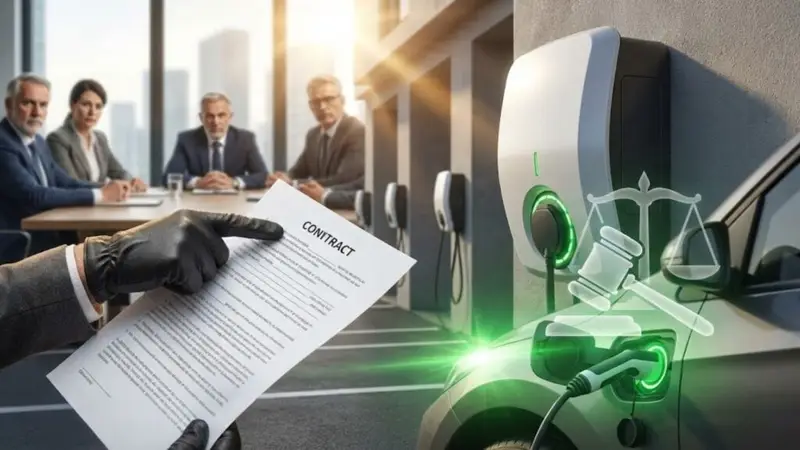
For many EV owners, the biggest range anxiety isn’t on the highway—it’s in their own driveway. If you live in a condominium or a community governed by a Homeowners Association (HOA), you know the frustration. You have the car, you have the parking spot, but a board of directors stands between you and a full battery.
Here is the good news: The law is likely on your side.
Across the United States, “Right to Charge” laws are changing the game, effectively voiding obstructionist HOA bylaws. Whether you are navigating HOA EV charger laws in California or fighting for a condo right to charge in Virginia, this guide provides the legal toolkit and actionable templates you need to cut through the red tape and get plugged in.
The Legal Landscape: Know Your “Right to Charge”
The most powerful tool in your arsenal is state statute. Many states have enacted legislation that explicitly forbids HOAs from prohibiting electric vehicle charging stations (EVSE). If your board says “no,” these laws say “yes”—provided you follow the rules.
California: The Gold Standard (Civil Code § 4745)
California has some of the strongest protections in the country. Under Civil Code § 4745, any covenant that “effectively prohibits or unreasonably restricts” the installation of an EV charger in an owner’s designated parking space is void and unenforceable.
- Key Protection: The HOA cannot simply say no. They must approve your application if it meets reasonable architectural standards.
- Time Limit: If the board does not deny your application in writing within 60 days, it is deemed approved.
- Damages: If an association willfully violates this section, they can be liable for damages and a civil penalty up to $1,000.
Virginia: The “Technically Feasible” Clause (Code § 55.1-1962.1)
The condo right to charge in Virginia is robust but comes with specific conditions. The law states that unit owners’ associations cannot prohibit an owner from installing an EV charger for personal use within their deeded parking space.
- The Catch: The installation must be “technically feasible” and “reasonably practicable.”
- Cost: You (the owner) are responsible for all costs, including separate metering and installation.
- Indemnity: You must agree to indemnify the association against any claims related to the charger.
Florida: The Condo Commander (Statute § 718.113)
Florida’s Statute § 718.113(8) is a critical weapon for condo owners. It declares that a declaration of condominium cannot prohibit a unit owner from installing an EV charging station within their limited common element (assigned) parking area.
- Power Move: The statute explicitly states that the installation “may not cause irreparable damage to the condominium property.” Since a professional electrical install rarely causes “irreparable damage,” this is a high bar for the board to use against you.
- Insurance: The association can require you to hold liability insurance and name them as an additional insured (more on this below).
New York: The Empire State Rules (Real Property Law § 339-ll)
New York’s Real Property Law § 339-ll mirrors California’s structure. It voids any by-law that unreasonably restricts EV charger installation.
- Process: Like California, New York requires the board to approve or deny within 60 days.
- Public Policy: The law explicitly states it is the policy of the state to “promote, encourage, and remove obstacles” to EV charging. Quote this preamble in your letters—it reminds the board that blocking you is against public policy.
Defining “Unreasonable Restrictions”
A common tactic for obstructionist boards is to allow the charger technically, but impose restrictions that make it impossible to install. This is often illegal.
When you are forcing an HOA to allow an electric car charger, you need to watch out for these “poison pill” restrictions. Under most Right to Charge laws, a restriction is “unreasonable” if it:
- Significantly increases the cost of the station (e.g., forcing you to use a specific, ultra-expensive vendor).
- Significantly decreases the efficiency of the station (e.g., limiting you to Level 1 charging speeds when Level 2 is safe).
Pro Tip: If your HOA demands you paint your charger a specific color or install expensive screening that adds $1,000 to the job, you can argue this violates the “unreasonable restriction” clause of your state’s statute.
The “Yesable” Proposal: How to Force Your HOA’s Hand
Don’t just send a generic email asking for permission. Submit a “Yesable Proposal”—a professional package that answers every objection before they can raise it.
To build a robust case for your charging infrastructure, your proposal must address the “Big Three” concerns: Safety, Aesthetics, and Insurance.
The Insurance Hurdle
Insurance is often the final sticking point.
- Florida & New York: The association can legally require you to provide a certificate of insurance naming them as an “additional insured.” You must contact your provider to add this endorsement.
- California Update: As of recent amendments, California law has relaxed the “additional insured” requirement for owners with chargers in exclusive use common areas, though you still need liability coverage. Always check the latest year’s specific amendment for your situation.
Actionable Templates
Use these templates to draft your official correspondence. Replace the bracketed text with your specific details.
Template 1: The Initial Request (The “Nice” Letter)
Subject: Request for Approval to Install EV Charging Station – Unit [Number]
Dear Board of Directors,
I am writing to formally request approval to install an Electric Vehicle Supply Equipment (EVSE) station in my deeded parking space #[Number].
In accordance with [State Name] [Law Code, e.g., California Civil Code § 4745], which asserts my right to install a charging station within my designated parking area, I have prepared a comprehensive installation plan that adheres to all community architectural and safety standards.
Included in this proposal package:
- Scope of Work: Installation of a Level 2 charger by [Name of Licensed Electrician], a fully licensed and bonded electrical contractor.
- Technical Specs: Specifications for the UL-listed charger unit.
- Insurance: Proof of liability insurance coverage [and certificate naming the HOA as additional insured, if applicable].
- Cost Agreement: A signed statement confirming I will bear all costs for installation, electricity usage, and maintenance.
This installation will not negatively impact common areas or community aesthetics. I look forward to your written approval within [Number, e.g., 60] days as per state statute.
Sincerely, [Your Name]
Template 2: The Rebuttal (The “Not So Nice” Letter)
Subject: Appeal of Denial for EV Charging Station – Unit [Number]
Dear Board of Directors,
I am in receipt of your denial regarding my request to install an EV charging station. I believe this decision may be based on a misunderstanding of [State Name] state law.
Specifically, [Law Code, e.g., Virginia Code § 55.1-1962.1] prohibits associations from effectively prohibiting or unreasonably restricting EV charger installations. The reason provided for denial—[Insert their reason, e.g., “we don’t like the look of it”]—constitutes an unreasonable restriction as defined by the statute, as it does not relate to a legitimate safety or engineering concern.
Refusing to allow this installation exposes the association to potential civil penalties and legal fees. I would prefer to resolve this amicably. Please reconsider my application based on the compliant plan submitted on [Date].
I expect a revised determination within 14 days.
Sincerely, [Your Name]
Frequently Asked Questions (FAQ)
Can my HOA deny my EV charger?
In states with Right to Charge laws (like CA, NY, VA, FL), they cannot issue a blanket denial. They can only deny it if there are legitimate safety issues or if installation is “technically impossible.” In states without these laws, they have more power, but you can still lobby for an amendment to the bylaws.
Who pays for the installation?
In almost every scenario, the homeowner pays 100% of the costs. This includes the charger, the electrician, the permitting, and any upgrades to the electrical panel required to support the load.
What if I don’t have a deeded parking spot?
This is trickier. Right to Charge laws typically apply to “exclusive use” common areas (your specific spot). If you park in a general “first-come, first-served” lot, you may need to petition the board to install a public community charger, rather than a private one.
Does the “Right to Charge” apply to renters?
It depends on the state. California and Colorado have specific provisions extending rights to renters, though the landlord can require the renter to pay for everything and restore the property upon moving out. Check your specific local statutes for renter protections.
Next Steps
Review your condo declaration or HOA covenants today. Look for the “Architectural Review” section—this is the process you will need to follow. Once you have identified the rules, download your state’s specific statute text (Civil Code § 4745, Code § 55.1-1962.1, etc.) and attach it to your application. It’s hard for a board to say “no” when the law is stapled to the request.