
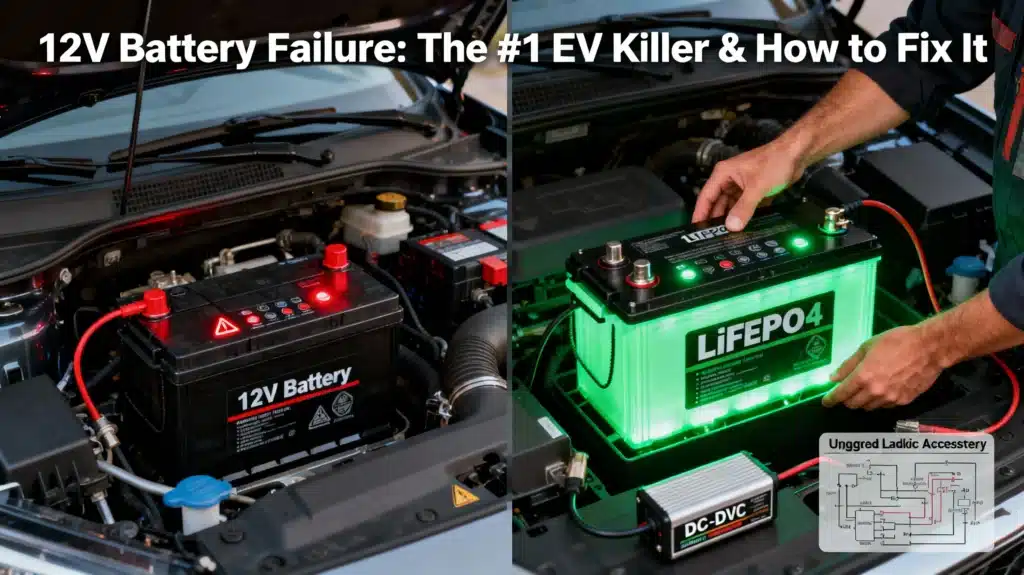
It is the nightmare scenario every electric vehicle owner fears. You walk up to your high-tech, fully charged EV, press the unlock button, and… nothing happens. The screen is black. The doors won’t open. You are locked out, and your car is effectively a brick.
You might panic, thinking the expensive high-voltage battery has failed. But 99% of the time, the culprit is much smaller, much cheaper, and much more annoying: the EV 12v battery dead and causing a total system lockout.
While the massive lithium-ion battery under your feet powers the motors, the humble 12-volt battery is the gatekeeper. Without it, the high-voltage system cannot turn on. This guide will explain why this happens and why upgrading to lithium 12v battery car kits is the ultimate DIY fix to ensure it never happens again.
The “Missing Alternator”: Why EV Batteries Die
To understand why your EV keeps eating 12V batteries, you have to understand how it charges. In a traditional gas car, an alternator spins while the engine runs, constantly feeding power to the battery.
Electric vehicles do not have alternators. Instead, they use a device called a DC-DC Converter. This takes high-voltage electricity from the main traction battery (400V or 800V) and steps it down to 12 volts to run your lights, radio, computers, and window motors.
The “Vampire Drain” Problem
The failure usually happens when the car is parked. Modern EVs are computers on wheels. Even when “off,” they are listening for app commands, downloading over-the-air updates, or running security systems (like Sentry Mode).
If the software logic is flawed—which is common in many first-generation EVs—the car forgets to “wake up” the DC-DC converter to top off the 12V battery. The accessories drain the small battery until it hits critical voltage. Once it dies, it doesn’t have enough power to close the “contactors” (heavy-duty switches) that connect the main high-voltage battery.
Result? Your car has 300 miles of range sitting in the floor, but it can’t start because the $150 lead-acid battery is dead.
Troubleshooting: How to Jump Start an EV
Before we talk about permanent fixes, you need to get back on the road. If you find your EV 12v battery dead, you can jump-start it, but you must be careful.
- Access the Terminal: You will likely need to pop the manual release for the frunk (often located in the tow hook eyelet cover on the bumper).
- Use a Low-Voltage Source: Do not use a massive diesel truck to jump your EV if you can avoid it. A portable lithium jump starter is safer for sensitive EV electronics.
- Connect and Wait: Connect the jumper cables. You aren’t trying to “crank” an engine; you just need enough voltage to wake up the computer.
- Turn the Car On: Once the screens light up, the car’s internal DC-DC converter will take over and start charging the 12V immediately.
Note: Always consult your manual before jumping, as improper voltage can damage the DC-DC converter.
The Permanent Fix: Upgrading to Lithium (LiFePO4)
Most EVs come from the factory with a cheap, heavy lead-acid battery. These old-school batteries hate being drained and sitting idle—exactly what EVs do. If you are tired of anxiety, the industry standard solution is upgrading to lithium 12v battery car units, specifically Lithium Iron Phosphate (LiFePO4).
Why LiFePO4 is Superior for EVs
Unlike lead-acid batteries which degrade after a few deep discharges, LiFePO4 batteries are designed for thousands of cycles. They maintain a higher, more stable voltage (around 13V) which keeps your EV’s sensitive electronics happier.
- Weight Reduction: A lithium 12V is often 60% lighter than the lead-acid anchor it replaces.
- Longevity: These batteries typically last 8-10 years, matching the lifespan of your car.
- Smart Management: High-end lithium replacements have their own Battery Management System (BMS) to prevent total death.
While performing this upgrade, it is critical to understand the broader context of battery health. You can read more about understanding the basics of battery safety to see how low-voltage health protects your high-voltage investment.
Ohmmu Battery Review: Is It Worth It?
If you search forums for “EV lithium upgrade,” one name dominates: Ohmmu. Writing a fair ohmmu battery review requires looking at the unique features they offer for Tesla, Hyundai, and other EV drivers.
Ohmmu batteries are “drop-in” replacements, meaning they are sized exactly like the OEM Group 51R or 99R battery your car came with. But the real “killer app” is their integrated BMS.
If the Ohmmu battery detects that your car is draining it dangerously low (a common issue with “vampire drain”), it will cut power to save itself before it is damaged. Furthermore, many models include Bluetooth monitoring, allowing you to check your 12V health from your phone without turning on the car. While they cost more upfront than a generic lead-acid replacement, the peace of mind of not getting stranded is often worth the investment for long-term owners.
Frequently Asked Questions (FAQs)
Why does my EV 12V battery keep dying? It is usually caused by parasitic “vampire” drain from third-party apps, dashcams, or software glitches that prevent the car’s high-voltage system from waking up to recharge the 12V battery.
Can I replace my EV lead-acid battery with a lithium one? Yes, but you should use a battery designed specifically for automotive use with a built-in BMS, like those from Ohmmu. Do not use a generic lithium battery without a management system, as it may confuse the car’s charging logic.
How long does a 12V battery last in an electric car? A standard lead-acid 12V battery in an EV typically lasts 2 to 4 years. A Lithium Iron Phosphate (LiFePO4) upgrade can last 8 to 10 years or more.
Is it safe to jump-start an electric car? Yes, provided you use the dedicated 12V jump posts (usually under the plastic trim in the frunk) and use a standard 12V source. Never attempt to touch or jump the high-voltage orange cables.
Relevant Video: How to jump start an electric car This video is relevant because it provides a visual demonstration of the jump-starting process described in the article, ensuring the understanding in the safety nuances specific to EVs.