
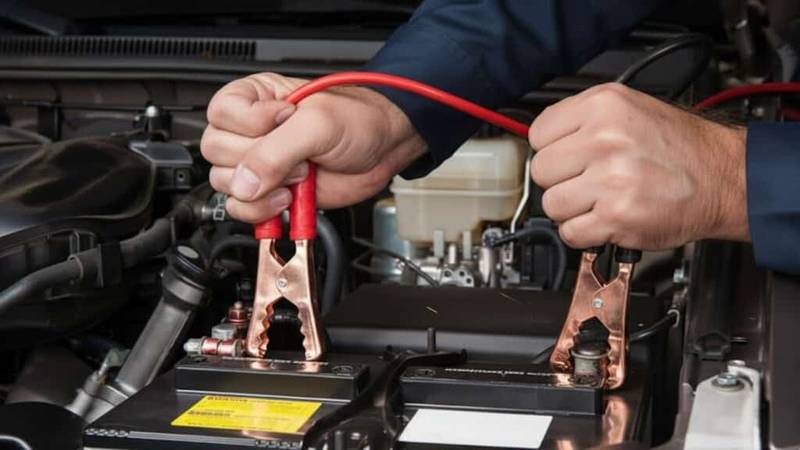
It’s a sound every driver dreads: the helpless, silent click when you turn the key, followed by the realization that your car battery is dead. It’s a moment of frustration that can leave you feeling stranded and powerless. But with the right knowledge and a set of jumper cables, you can safely get back on the road.
This guide is designed to be the ultimate, safety-first resource for anyone needing to know how to hook up jumper cables. Based on established automotive engineering principles and safety protocols recommended by vehicle manufacturers and safety organizations, this comprehensive walkthrough will turn a moment of panic into a moment of confident action. We will cover not just the “how,” but the critical “why” behind each step, ensuring you understand the process to protect yourself, your vehicle, and anyone helping you.
Pre-Jump Checklist
A successful and safe jump-start is 90% preparation and 10% execution. The steps taken before the cables are ever connected are the most critical for preventing accidents. Rushing this phase can lead to vehicle damage or serious personal injury. By methodically following this pre-jump checklist, you establish a controlled environment that minimizes risk and sets you up for a successful outcome.
Gathering the Right Tools
Before you begin, ensure you have the proper equipment on hand. The quality of your tools can make the difference between a quick start and a frustrating failure.
- High-Quality Jumper Cables: Not all jumper cables are created equal. A good set should be thick (a lower gauge number, like 4 or 6, is better), with adequate insulation and clean, strong metal clamps that can “bite” into the battery terminals. Cheap, thin cables may not be able to carry the necessary current to start your car, especially in cold weather, and can even melt during the process.
- Safety Gear: Always wear safety glasses or goggles and protective gloves. Car batteries contain corrosive sulfuric acid and can release flammable gases. Protecting your eyes and hands is non-negotiable.
- A Donor Vehicle: You will need a second car with a healthy, fully charged battery of a similar voltage (virtually all cars use a 12V system).
- Portable Jump Starter (Alternative): A modern, highly recommended alternative is a portable jump starter or “jump box.” These self-contained battery packs eliminate the need for a second vehicle and often have built-in safety features that prevent common mistakes, making them an almost foolproof option.
Staging the Scene for Safety
Properly positioning the vehicles is a crucial first step in creating a safe workspace.
- Position the Vehicles: Park the donor vehicle (the one with the good battery) close enough to the disabled vehicle so the jumper cables can reach both batteries without being stretched taut. They can be nose-to-nose or side-by-side.
- Ensure No Contact: The two vehicles must not touch each other. If the metal frames of the cars are in contact, it can create an unintended electrical ground path when the cables are connected, potentially leading to sparks and damage to the electrical systems of both cars.
Critical Safety Shutdown Procedure
Before handling any cables, both vehicles must be completely powered down and secured.
- Turn Off Both Vehicles: Turn the ignition off in both cars and remove the keys. This prevents any electrical current from flowing while you make the connections.
- Engage Brakes and Set Transmission: Put both cars in Park (for automatic transmissions) or Neutral (for manual transmissions) and firmly engage the parking brake on both vehicles.
- Turn Off All Accessories: Make sure all electrical components—headlights, interior lights, radio, air conditioning, and hazard flashers (if in a safe location)—are turned off in both cars. This minimizes the electrical load and ensures as much power as possible goes to charging the dead battery.
The Most Important Step: Battery Health Inspection
This is a critical safety gate. Before proceeding, you must visually inspect the dead battery.
- Look for Damage: Carefully examine the battery case. If you see any cracks, bulging or swelling sides, or signs of leaking fluid (often a greasy or corroded residue around the terminals), DO NOT PROCEED. Attempting to jump-start a physically damaged battery can cause it to explode, spraying corrosive acid and plastic shrapnel.
- Check for a Frozen Battery: In cold climates, a dead battery can freeze. A frozen battery may look swollen or have cracks in the casing. Never attempt to jump-start a frozen battery, as this can also cause a catastrophic explosion. The battery must be removed and thawed indoors first.
If you observe any of these conditions, your only safe option is to call for professional roadside assistance or have the vehicle towed to a repair shop.
The Do’s and Don’ts of Jump-Starting
For a quick reference, keep these critical safety rules in mind. This simple checklist can prevent the most common and dangerous mistakes.
| Do’s of Jump-Starting a Car | Don’ts of Jump-Starting a Car |
| DO wear safety glasses and gloves. | DON’T let the metal clamps touch each other once connected. |
| DO inspect both batteries for damage before starting. | DON’T attempt to jump a frozen, cracked, or leaking battery. |
| DO connect cables in the precise, correct order. | DON’T connect the final black clamp to the dead battery’s negative post. |
| DO ensure clamps have a firm, solid bite on metal. | DON’T allow the two vehicles to physically touch. |
| DO disconnect cables in the exact reverse order. | DON’T smoke or have open flames anywhere near the batteries. |
The Correct Order to Attach Jumper Cables
The specific order in which you attach jumper cables is not arbitrary; it is a carefully designed procedure to minimize the risk of electrical shorts and dangerous sparks. Following this sequence precisely is the key to a safe jump-start.
Decoding Your Battery and Cables
First, identify the components you’ll be working with.
- Battery Terminals: Open the hood of each car and locate the batteries. Each battery has two metal posts, or terminals. One is positive (+), and the other is negative (-).
- The positive (+) terminal is almost always marked with a “+” symbol and is often covered by a red plastic cap. The terminal itself is typically larger than the negative one.
- The negative (-) terminal is marked with a “-” symbol and is usually uncovered.
- Jumper Cables: Your jumper cables are color-coded for this exact purpose.
- The RED cable is for the POSITIVE (+) connection.
- The BLACK cable is for the NEGATIVE (-) connection.
The Connection Sequence: “Red from the Dead…”
To make the sequence easy to remember, use this simple mnemonic: “Red from the dead to red on the good. Black from the good, to under the hood.”. This rhyme perfectly describes the safe, four-step connection process. As you connect the cables, make sure the metal clamps at the other end are not touching each other or any metal part of either car.
- Step 1: Red to Dead (+) Attach one of the RED clamps to the POSITIVE (+) terminal of the DEAD battery (the car that won’t start). Wiggle the clamp to ensure it has a solid, firm connection, biting through any minor corrosion on the terminal.
- Step 2: Red to Good (+) Attach the other RED clamp to the POSITIVE (+) terminal of the GOOD battery (the donor vehicle).
- Step 3: Black to Good (-) Attach one of the BLACK clamps to the NEGATIVE (-) terminal of the GOOD battery.
- Step 4: Black to Ground This is the final and most critical connection for safety. Attach the last BLACK clamp to an unpainted piece of heavy metal on the engine block or chassis of the DEAD car. Good grounding points include a large, unpainted bolt head, a metal bracket on the engine, or a designated grounding post if your vehicle has one. This connection should be made several inches away from the battery. Do NOT connect this last clamp to the negative terminal of the dead battery.
The “Why”: the Science of Spark Prevention
Following this order is a deliberate risk-management strategy. It’s not about preventing a spark entirely—which is nearly impossible when completing a high-current circuit—but about controlling where that inevitable spark occurs.
Lead-acid batteries can release small amounts of flammable hydrogen gas, especially when being charged or discharged. The final connection you make is the one that completes the electrical circuit, and it will almost certainly create a small spark. If you were to make this final connection on the negative post of the dead battery, the spark would occur right next to the battery, where hydrogen gas concentrations could be highest. This creates a risk of igniting the gas and causing a battery explosion. By making the final connection on a solid ground point on the engine or chassis—away from the battery—you ensure that the spark happens far from the potential fuel source, drastically reducing the risk.
Furthermore, the reason for connecting the positive (red) cable first is equally important for safety. In all modern cars, the entire metal chassis and engine block are connected to the negative battery terminal, serving as the vehicle’s “ground”. If you were to connect the negative (black) cable first, the entire frame of the car would become an extension of the good battery’s negative terminal.
Then, if the live positive (red) clamp were to accidentally touch any metal part of the car while you were connecting it, you would create a massive short circuit, resulting in a large, dangerous shower of sparks and potential damage to both vehicles’ electrical systems. By connecting the positive cable first, you avoid energizing the chassis, effectively minimizing the risk of an accidental short circuit.
The Jump-Start: Powering Up and Disconnecting Safely
With the cables correctly and safely connected, you are ready to transfer power and bring the dead car back to life. The disconnection process is just as important as the connection and must be done in the precise reverse order.
Charging and Starting
- Final Cable Check: Before starting either car, do a final visual check to ensure the cables are routed away from any moving parts, like fans or belts.
- Start the Donor Car: Start the engine of the vehicle with the good battery.
- Wait and Charge: Let the donor vehicle run for several minutes (a range of 2-5 minutes is commonly recommended). This allows the good car’s alternator to send a surface charge to the dead battery, giving it a small boost before you try to start it.
- Attempt to Start the Dead Car: Try to start the vehicle with the dead battery. It should turn over. If it doesn’t start on the first try, don’t continuously crank the engine. Wait another few minutes with the donor car running and try again. If it still won’t start after a couple of attempts, there may be another issue beyond a dead battery.
The Disconnection Sequence: The Exact Reverse Order
Once the disabled vehicle is running smoothly, it’s time to disconnect the jumper cables. This must be done in the exact reverse order of how they were connected. This sequence is designed to break the circuit at the safest point first.
There is some conflicting advice regarding whether the vehicles should be running during disconnection. The safest and most practical method is to keep the newly started car running to ensure its alternator begins charging the battery immediately, while turning off the donor vehicle to reduce risk.
- Remove the BLACK clamp from the GROUND point on the formerly dead car.
- Remove the BLACK clamp from the NEGATIVE (-) terminal of the donor car.
- Remove the RED clamp from the POSITIVE (+) terminal of the donor car.
- Remove the RED clamp from the POSITIVE (+) terminal of the formerly dead car.
Throughout this process, be extremely careful not to let the metal clamps touch each other or any metal part of either car.
After the Jump: How Long to Run Your Car
A jump-start is just that—a start. It does not recharge the battery. That job belongs to your vehicle’s alternator, which only works effectively when the engine is running.
- Drive the Vehicle: To give the alternator enough time to put a meaningful charge back into the battery, you should drive the car for at least 30 to 60 minutes.
- Maintain Higher RPMs: Ideally, this drive should be at highway speeds rather than in stop-and-go traffic. The alternator produces more electricity at higher engine RPMs.
- Avoid Idling: Simply letting the car idle in the driveway is a very inefficient way to charge the battery. At idle, especially with accessories like the A/C and headlights on, the alternator may not produce enough surplus power to significantly charge the battery. In some cases, the battery could even continue to slowly lose charge. A 30-minute drive is far more effective than a 30-minute idle.
Troubleshooting and Common Questions
Even with a perfect procedure, questions and issues can arise. This section addresses the most common concerns and troubleshooting steps.
What Happens If I Hook Up Jumper Cables in the Wrong Order?
Connecting jumper cables incorrectly, particularly reversing the polarity (connecting positive to negative), can have severe and expensive consequences for modern vehicles. The potential outcomes range from minor to catastrophic:
- Blown Fuses: The vehicle’s fuses are designed to be the first line of defense, and a reverse connection will often blow one or more of them, disabling various electrical systems.
- Damaged Battery: The sudden surge of current can cause irreparable internal damage to one or both batteries, potentially causing them to leak or fail completely.
- Melted Jumper Cables: The massive current from a short circuit can overheat the cables, melting the insulation or even causing a fire.
- Fried Electronics: This is the most significant risk in modern cars. The voltage spike can destroy sensitive electronic components like the alternator, sensors, and even the main engine control unit (ECU) or powertrain control module (PCM). A repair of this nature can cost thousands of dollars.
- Personal Injury: Reversing the cables creates large sparks. If these sparks ignite the hydrogen gas venting from a battery, it can cause a violent explosion, posing a serious risk of injury from acid and shrapnel.
Can You Jump-Start a Completely Dead Battery?
The answer depends on what “completely dead” means.
- If the battery is just deeply discharged: Yes, it can often be jump-started. It might require leaving the donor car connected and running for a longer period (perhaps 10-15 minutes) before attempting to start the dead car to build up a sufficient surface charge.
- If the battery is internally damaged or sulfated: No, it cannot be revived with a jump-start. A battery in this condition is no longer capable of accepting or holding a charge. Signs that a battery is truly beyond saving include:
- The engine cranks very slowly or not at all even after being connected for several minutes.
- You need to jump-start the car frequently.
- The car starts but dies immediately after the cables are disconnected.
- The battery is visibly damaged, swollen, or leaking.
If you suspect the battery is permanently failed, it will need to be replaced.
Do You Put Red or Black on First?
To be perfectly clear: Always connect the RED (positive) cable first. As explained earlier, this is a critical safety step. Connecting the positive clamps first ensures that the entire metal frame of the car does not become a live ground point, which dramatically reduces the chances of creating an accidental and dangerous short circuit while you handle the live negative clamp.
Do You Turn Off the Car Before Disconnecting Jumper Cables?
As addressed in the previous section, the safest and most practical procedure is a hybrid approach. Once the dead car has started and is running on its own power, keep it running. Then, turn off the donor vehicle. After the donor vehicle is off, you can proceed to disconnect the cables in the exact reverse order. This method ensures the newly revived car’s alternator has a chance to start charging its battery, preventing it from dying again immediately, while also adding a layer of safety by shutting down the donor car before removing the cables.
What If My Car Dies Again Right After the Jump?
If your car starts successfully but dies shortly after the jump-start (either immediately after disconnecting the cables or during your drive), it points to one of two primary issues:
- A Failed Battery: The battery is no longer capable of holding a charge. The jump-start provided enough power to get the engine running, but as soon as the external power source was removed, the dead battery couldn’t sustain the vehicle’s electrical system on its own.
- A Faulty Alternator: The alternator is the component responsible for generating electricity while the engine is running and recharging the battery. If the alternator has failed, the battery will not be recharged as you drive. The car will run off the battery’s remaining charge for a short time until it is depleted again, at which point the engine will stall.
In this situation, the next step is to have both your battery and your vehicle’s charging system professionally tested to determine the root cause.
The Modern Method: How to Use a Portable Jump Starter
For drivers seeking a safer, faster, and more convenient solution, the portable jump starter is an essential piece of emergency equipment. These compact units contain a powerful lithium-ion battery and eliminate the need for a second vehicle, allowing you to jump-start your car by yourself, anywhere.
The process is simpler and generally safer due to built-in protective features.
- Preparation: Ensure your portable jump starter is adequately charged before you need it. Most have indicator lights to show their charge level.
- Connection: With the jump starter pack turned off, connect its clamps directly to your car’s battery.
- Connect the RED clamp to the POSITIVE (+) terminal.
- Connect the BLACK clamp to the NEGATIVE (-) terminal.
- Note: Unlike with traditional cables, connecting directly to the negative terminal is standard practice for most jump starters. These devices have built-in reverse-polarity and anti-sparking technology that prevents the dangerous conditions that the traditional grounding method is designed to avoid. Many units will sound an alarm or show a warning light if you connect them incorrectly.
- Activation: Turn the jump starter pack on. There is usually a power button or switch.
- Start the Car: Attempt to start your vehicle. It should start immediately if the dead battery was the only issue.
- Disconnection: Once the car is running, turn the jump starter pack off. Disconnect the clamps in the reverse order: black first, then red.
These devices effectively automate the most critical safety checks, removing the potential for human error that makes traditional jump-starting risky. They represent a significant advancement in roadside safety and are a worthwhile investment for any driver.
Driving Forward with Confidence
Knowing how to hook up jumper cables is a fundamental skill that can save you from being stranded. By internalizing the critical safety rules—always inspect the battery first, connect in the correct order (Red Dead, Red Good, Black Good, Black Ground), and disconnect in the exact reverse—you can confidently handle this common automotive problem.
However, remember that a jump-start is a temporary fix, not a permanent solution. The battery died for a reason. The crucial final step is to determine why it failed. After successfully jump-starting your car and driving it to recharge the battery, have your vehicle’s battery and entire charging system professionally tested. A technician can quickly determine if you simply need a new battery or if there is an underlying issue with your alternator. Addressing the root cause is the only way to ensure you won’t find yourself in the same situation again, turning a moment of helplessness into a lesson in preparedness.
Checkout: How to Plan a Long Distance Trip in an Electric Car