
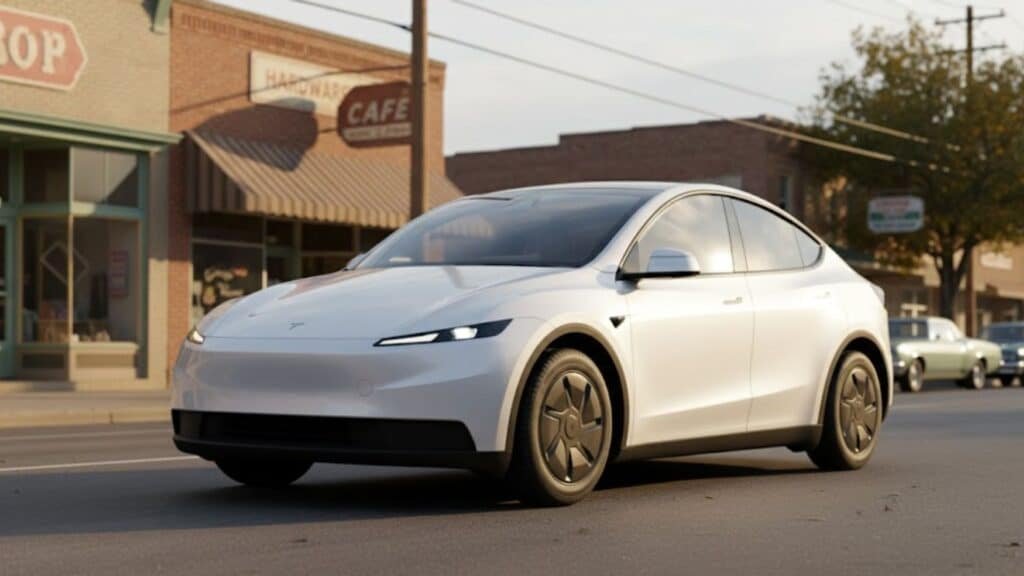
For years, the electric vehicle community has been captivated by a ghost: a truly affordable, mass-market car from Tesla. Online, this phantom vehicle has a name—or rather, several names. Search results are filled with sensational headlines and slickly produced videos proclaiming, “2026 Tesla Model Q Is Finally Here!”. These digital creations depict a futuristic compact SUV, often with razor-thin LED light bars and cybernetic headlights, promising a revolution in electric mobility for the masses.
However, the reality of Tesla’s affordable car is a far more complex and turbulent story, one defined by shifting priorities, revolutionary manufacturing concepts, and a high-stakes pivot in corporate strategy. The names that dominate search engines, “Tesla Model Q” and “Tesla Model 2,” are not official designations from the automaker. They are placeholders, born from an information vacuum and amplified by intense public demand. The immense online interest in these non-existent models serves as a powerful market signal, reflecting a massive, unmet appetite for a product that Tesla has repeatedly promised but has yet to deliver.
This report cuts through the speculation to provide a definitive, fact-based account. It deconstructs the rumors, traces the volatile history of the $25,000 EV project, reveals the groundbreaking technology that was shelved, and analyzes what Tesla ultimately delivered. The story of the “Model Q” is the story of a promise that began with the company’s founding “Master Plan” and continues to shape its future.
What Are the ” Tesla Model Q” and “Model 2?”
To understand Tesla’s affordable vehicle strategy, it is essential to first clarify the terminology that has muddied the waters. Neither “Model Q” nor “Model 2” are official names confirmed by Tesla for any past, present, or future vehicle. Their persistence reveals a significant disconnect between the company’s unconventional communications and public perception.
The “Model Q” Moniker
The name “Model Q” appears to have originated from two distinct sources. Primarily, it was an internal placeholder used by analysts at Deutsche Bank to refer to Tesla’s rumored entry-level car in a report to investors. This analyst-created name was then picked up by media outlets and content creators. Concurrently, the name has roots in a meme referencing “Tesla Q” short-sellers, a group of investors betting against the company’s stock. While CEO Elon Musk has been known to embrace memes, there is no evidence that Tesla ever officially adopted this name.
The “Model 2” Myth
Similarly, the “Model 2” name is a fan- and media-created term that has never been used officially by the company. The name likely emerged as a logical placeholder for a vehicle positioned below the Model 3, fitting into the playful “S3XY” naming convention that characterizes Tesla’s lineup. Musk himself has distanced the company from the “Model 2” name. This naming scheme itself has a history of adaptation; the Model 3 was originally intended to be the “Model E” to spell out “SEX,” but Ford’s trademark on the name forced a change. This history provides context for why the public and media are quick to fill in the blanks when Tesla’s product roadmap is unclear.
While the public has been discussing these speculative names, Tesla has used its own internal codenames for its affordable vehicle projects, most notably “Project Redwood” and “Project E41,” which represent very different approaches to achieving a lower price point.
The Volatile Timeline of Tesla’s $25,000 Car
The journey toward an affordable Tesla has been a decade-long saga of on-again, off-again commitments, reflecting a deep internal tension between the goals of mass-market vehicle production and the pursuit of full autonomy.
- 2006: The genesis of the promise can be traced back to Elon Musk’s first “Master Plan,” which laid out a clear strategy: build a sports car, use the profits to build an affordable car (which became the Model S), and use that money to build an “even more affordable car”.
- September 2020: At Tesla’s highly anticipated Battery Day event, Musk gives the project an official nod, teasing a compelling $25,000 electric vehicle.
- January 2022: The project is abruptly put on ice. Musk informs investors that Tesla is “no longer working on” the $25,000 car, stating the company has “enough on our plate”.
- December 2023: In a sharp reversal, Musk declares the project is back on, telling analysts the company is “obviously” still working on the affordable EV.
- April 2024: A pivotal report from Reuters, citing internal sources, claims Tesla has canceled the affordable car to focus its resources on a dedicated robotaxi. Musk issues a swift and public denial on social media, stating that “Reuters is lying”.
- Subsequent Developments: Later reports corroborated the original Reuters story, revealing that senior Tesla executives were “taken aback” by Musk’s public denial, as the project had, to their knowledge, been terminated internally.
- October 2025: During a quarterly earnings call, Musk provides the final word, confirming that Tesla’s priority has shifted to the autonomous “Cybercab.” He dismisses the idea of a conventional, human-driven $25,000 car as “pointless” and “silly,” effectively ending the project in its original form.
This volatile timeline is not a reflection of engineering roadblocks but of Musk’s fluctuating strategic vision. The periods where the project was “on” aligned with a focus on scaling vehicle production. The periods where it was “off” coincided directly with an intensified push toward Full Self-Driving (FSD) and the Robotaxi concept, revealing a fundamental debate over whether Tesla’s future lies in being a car manufacturer or an AI company.
Project Redwood and the “Unboxed” Revolution
Before the project was shelved, Tesla was working on a truly revolutionary vehicle under the internal codename “Project Redwood”. This was not merely a stripped-down version of an existing car but a ground-up effort to redefine affordable manufacturing.
Rumored specifications for the “Redwood” vehicle pointed to a compact crossover or hatchback, approximately 15% smaller and 30% lighter than the Model 3. The plan involved using a cost-effective 53 kWh Lithium Iron Phosphate (LFP) battery, targeting a range of around 250 to 310 miles. Tesla’s ambition was clear: it sent requests to suppliers forecasting a production volume of 10,000 vehicles per week, with a targeted start date of mid-2025.
The most groundbreaking aspect of “Project Redwood,” however, was not the car itself but the “unboxed” manufacturing process designed to build it. This method sought to shatter the century-old, linear assembly line model pioneered by Henry Ford. The concept was to build the car in parallel, with major sub-assemblies manufactured and fully outfitted simultaneously in different areas of the factory. These large modules—such as the front body, the rear body (both created with gigacasting presses), the side panels with doors and windows pre-installed, and the structural battery pack—would then be brought together and snapped into place only at the final stage of production, much like assembling large Lego bricks.
Tesla projected that this “unboxed” method would reduce the required factory footprint by over 40% and slash manufacturing costs by as much as 50% compared to its already-efficient Model 3 and Model Y production lines. This manufacturing innovation was the key that would have unlocked a profitable $25,000 EV. The cancellation of “Project Redwood” was therefore not just the loss of a car model, but the shelving of a manufacturing philosophy that had the potential to make all EVs more affordable.
How the Cybercab Derailed the Affordable EV
The ultimate demise of “Project Redwood” can be attributed to a single, decisive strategic pivot: the prioritization of a fully autonomous Robotaxi, later named the “Cybercab”. Internal reports confirmed that Musk’s directive was to “go all in on robotaxi,” using the same next-generation platform that had been intended for the affordable consumer car.
Musk’s rationale, articulated in investor calls, was that in a future dominated by self-driving vehicles, the economic value shifts from individual car ownership to operating a high-margin autonomous ride-hailing network. From this perspective, producing a low-margin, human-driven $25,000 car was “pointless”. He framed this pivot as a litmus test for investors, stating, “If somebody doesn’t believe Tesla is going to solve autonomy, I think they should not be an investor in the company”.
The Cybercab, a purpose-built vehicle with no steering wheel or pedals, became the new focus. This decision was not without internal friction. Reports suggest that key executives, including head of design Franz von Holzhausen, attempted to persuade Musk to pursue both the affordable car and the Robotaxi, and were left in a state of confusion by his public denial of the project’s cancellation.
This strategic shift represents a monumental gamble. Tesla abandoned the tangible, proven, and massive global market for affordable vehicles to chase a future monopoly on Level 5 autonomy—a technology that faces immense technical and regulatory hurdles and has no clear timeline for approval. Having promised full autonomy was just “a year away” for nearly a decade, Musk has bet the company’s near-term growth on a long-term vision that remains speculative.
You may like: Affordable Byd Dolphin Mini Price & Specs Overview
Tesla’s Answer: The “Standard” Model 3 and Model Y Trims
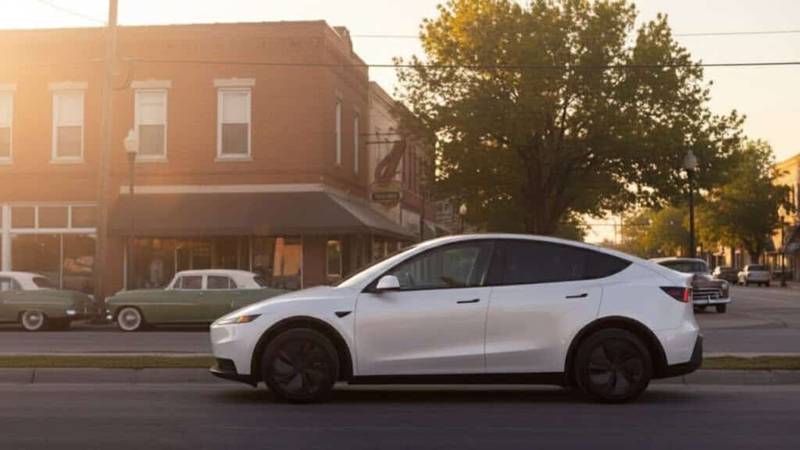
In late 2025, after years of speculation, Tesla finally provided its answer to the demand for affordability. It was not a revolutionary new vehicle, but rather de-contented, lower-priced “Standard” trims of the existing Model 3 and Model Y. This approach allows Tesla to leverage its current platforms and manufacturing lines, a more capital-efficient strategy but one that yields far fewer cost savings than the “unboxed” “Project Redwood” plan. Musk himself confirmed this pragmatic approach, stating plainly that the new affordable car is “just a Model Y”.
The new trims were introduced with starting prices of $36,990 for the Model 3 Standard and $39,990 for the Model Y Standard. The roughly $5,000 price reduction from the “Premium” trims, however, comes at the cost of numerous features and performance attributes.
| Feature Comparison | Model Y Standard | Model Y Premium (RWD) | Model 3 Standard | Model 3 Premium (RWD) |
| Price (MSRP) | $39,990 | $44,990 | $36,990 | $41,990 |
| Range (EPA est.) | 321 miles | 357 miles | 321 miles | 363 miles |
| 0-60 mph | 6.8 seconds | 5.4 seconds | 5.8 seconds | 4.9 seconds |
| Exterior – Wheels | 18″ Steel (“Aperture”) | 19″ Aluminum (“Gemini”) | 18″ Aluminum (“Prismata”) | 18″ Aluminum (“Prismata”) |
| Exterior – Lighting | LED lightbars removed | LED lightbars included | LED lightbars removed | LED lightbars included |
| Exterior – Roof (Model Y) | Metal Roof | Panoramic Glass Roof | N/A (Glass roof standard) | N/A (Glass roof standard) |
| Interior – Seating | Fabric / Partial Premium | Premium Vegan Leather | Partial Premium Interior | Premium Interior |
| Interior – Heated Seats | Front only | Front & Rear | Front only | Front & Rear |
| Interior – Audio System | Basic Audio | Premium Audio (14 speakers, subwoofer, 2 amps) | Basic Audio | Premium Audio (14 speakers, subwoofer, 2 amps) |
| Interior – Rear Screen | Removed | 8″ Rear Touchscreen | Removed | 8″ Rear Touchscreen |
| Driver Assistance | Traffic-Aware Cruise Control | Autosteer Included | Traffic-Aware Cruise Control | Autosteer Included |
| Connectivity | Standard Connectivity | Premium Connectivity (Trial) | Standard Connectivity | Premium Connectivity (Trial) |
A Discount or a Disappointment? How Experts and Wall Street Reacted
The launch of the “Standard” trims was met with a deeply underwhelmed, if not outright critical, reception from Wall Street analysts and industry experts. The central criticism was that the timing of the launch rendered the price cut almost meaningless. The new models debuted just after the $7,500 federal EV tax credit expired, meaning that for a consumer, the new “affordable” Model Y was effectively more expensive than the “Premium” trim had been with the credit applied a week earlier.
Even staunch Tesla bull Dan Ives of Wedbush expressed that he was “relatively disappointed” with the launch, noting the price point remained high compared to competitors. Analysts characterized the move not as a genuine product catalyst, but as a “psychological fix” and “accounting choreography”—a low-investment way to maintain delivery volumes and keep assembly lines busy without the capital expenditure of a new model. The concern was that these cheaper versions would primarily cannibalize sales of more profitable “Premium” trims rather than attract a new segment of buyers. This sentiment was reflected in the market, with Tesla’s stock falling 4.5% following the announcement.
The more optimistic bull case views these “Standard” models as mere “filler”—a tactical bridge to keep sales numbers afloat until Tesla’s true value is unlocked through its AI and autonomy ventures, such as the FSD software and the future Cybercab network. This perspective underscores the reality of the launch: it was a tactical retreat to manage quarterly expectations, not a strategic offensive to conquer the mass market.
The Competitive Landscape: How Tesla’s “Affordable” Cars Compare
While the Standard trims make Tesla ownership more accessible, they enter a crowded and highly competitive segment of the EV market. A direct comparison shows that while they are cheaper for a Tesla, they are positioned at the premium end of the affordable market, facing formidable rivals that often offer compelling value propositions.
The Chevrolet Equinox EV, in particular, has emerged as a major competitor, becoming the best-selling non-Tesla EV in the United States by offering a similar range at a significantly lower starting price. The market is now populated with strong offerings from legacy automakers and dedicated EV brands alike.
| 2025-2026 Affordable EV Market Snapshot | Starting MSRP | EPA-Estimated Range | Battery Size (kWh) |
| Nissan Leaf (S Plus, 2026) | $31,485 | ~303 miles | ~75 kWh |
| Hyundai Kona Electric (SE) | $34,470 | ~200 miles | ~48.6 kWh |
| Chevrolet Equinox EV (1LT FWD) | $34,995 | ~319 miles | Not Specified |
| Hyundai Ioniq 5 (SE Std Range) | $36,600 | ~220 miles | ~58 kWh |
| Tesla Model 3 Standard | $36,990 | ~321 miles | ~60 kWh (LFP) |
| Ford Mustang Mach-E (Select RWD) | $39,990 | ~240 miles | ~73 kWh |
| Tesla Model Y Standard | $39,990 | ~321 miles | ~60 kWh (LFP) |
The Future of an Entry-Level Tesla
The story of the “Tesla Model Q” is a cautionary tale of hype, speculation, and strategic pivots. The name itself is a myth, a phantom born from an information vacuum that Tesla’s unconventional communication style allowed to flourish. The real project, “Project Redwood,” represented a potential revolution in automotive manufacturing that was ultimately sacrificed for a high-risk, high-reward bet on a fully autonomous future.
What consumers received instead—the “Standard” Model 3 and Model Y—is a pragmatic but uninspired compromise. It is a tactical move to defend market share and manage quarterly delivery expectations in the face of an aging lineup and intensifying competition. While these de-contented models lower the price of entry into the Tesla ecosystem, they fail to fundamentally alter the affordability equation or deliver on the long-standing promise of a true mass-market, sub-$30,000 EV.
checkout: Cheap Electric SUVs under $20k: 2025’s Best Picks
More articles about Electric machines and vehicles on Wheel Thrive.